The constant gardener
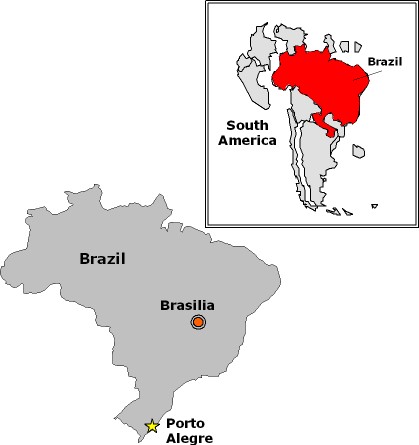
Porto Alegre, Brazil
Imre Szeman,
McMaster University
Porto Alegre, a city of 1.5 million, is the capital of Rio Grande do Sul, the southernmost
state of Brazil. One of the chief commercial and industrial centers in Brazil, it burst on
to the world scene in 2001 as the site of the first World Social Forum (WSF). It has since
hosted the WSF on two other occasions (2002 and 2003), and is set to host it biannually
beginning with the 2005 WSF.
 |
| Figure 1 |
Porto Alegre emerged as the site of the WSF as a result of the city's innovative approach to
public governance and urban planning, which led the Brazilian-French coalition of groups who
organized the first WSF to approach local politicians for their support in hosting the
event. Beginning with the election of Olivio Dutra of the Brazilian Workers' Party (Partido
dos Trabalhadores or PT) in 1988, Porto Alegre has been viewed as a model for city
development in the developing world. Under the PT, the city has made enormous strides in the
provision of basic city services (sewage, environmental protection, social housing, and
transportation) and in creating greater social equality for all its citizens.
The key mechanism in this change has been the introduction of the participative budget
(orçamento participativo or OP). By involving citizens directly in the
design of the budget, the city has invested in the infrastructural elements most desired by
its citizens while minimizing the corruption that has long characterized Brazilian politics.
Other cities, such as São Paulo, are now experimenting with the OP.