The constant gardener
Transylvania
Julie Sunday,
McMaster University
Transylvania has historically been part of both the Ottoman and the
Austro-Hungarian Empires, until its eventual incorporation into Romania following World War I. Its history as part of both Hungary and Romania has had an impact on relations between the Romanian State, the Hungarian State, and the Hungarian minority in Transylvania.
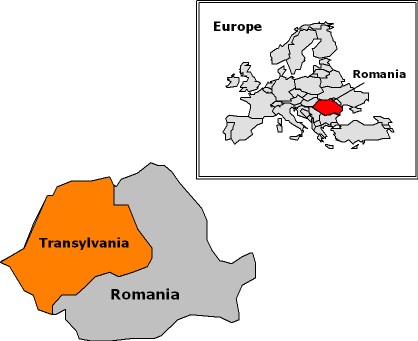 |
| Figure 1 |
Social, political, and religious circumstances delineated differences between
Romanians and Hungarians during the period of Hungarian jurisdiction over the region. Although laws of national and religious tolerance were codified as early as 1437, this basis for privilege categorically excluded the largely Eastern Orthodox Romanian nation (Verdery 1983). A distinction thus emerged between "recognized" and "tolerated" nations and religions that set the stage for future conflict in Transylvania.
The exclusion of Romanians from political power in Transylvania changed
dramatically following World War I. On 4 June 1920 at Versailles, Hungary was forced to
sign the Treaty of Trianon and cede Transylvania to Romania. Given the large
population of Romanians in the region, their entitlement to Transylvania was
framed within Woodrow Wilson's new language of "self-determination" for the
nations of Eastern Europe (MacMillan
2001). Since 1920, the Hungarian minority in Transylvania has been
under the jurisdiction of a highly centralized and nationalistic Romanian state.
Throughout Romanian communism, hostile nationalistic policies were directed
toward assimilating and displacing the Hungarian minority in Transylvania (Gilberg 1990).
Since the revolution to overthrow communism in 1989, both Hungarian and Romanian nationalism has increased, escalating latent tensions between these two groups. The disputed status of Transylvania remains central to this dynamic. The Hungarian minority in Transylvania has argued for regional autonomy by aligning their goals with the European Union and its support of regional integration. Given the legacy of border changes in this region, the Romanian State perceives these claims for Hungarian autonomy in Transylvania as a potential threat to their sovereignty and territory. This dynamic between the Hungarian minority and the Romanian state has also negatively impacted relations with neighbouring Hungary.
Works Cited:
Gilberg, Trond. 1990.
Nationalism and communism in Romania: The rise and fall of Ceausescu's personal dictatorship. Boulder, CO:
Westview Press.
MacMillan, Margaret. 2001.
Paris 1919: Six months that changed the world. New York:
Random House Press.
Verdery, Katherine. 1983.
Transylvanian villagers: Three centuries of political, economic, and ethnic change. Berkeley:
University of California Press.