The constant gardener
Erich Fromm (1900-1980)
Neil McLaughlin,
McMaster University
Few intellectuals in the twentieth century played the role of the global public intellectual
as successfully as the controversial social critic Erich Fromm. The author of such
influential books as Escape from Freedom (1941), The Sane Society (1955), and To Have or To Be
(1976), Fromm combined the role of scholar, activist, and popular critic. Born in Germany in
1900, Fromm was a member of the "critical theorists" of the Frankfurt School. Exiled from
Nazi Germany in the 1930s, Fromm moved to the United States, developed an unorthodox
Freudian psychology, and wrote best-selling and critically acclaimed books on Nazism,
communitarian socialism, disarmament, and humanistic Marxism. Moving to Mexico City in the
early 1950s, and then back to Europe in the last decade of his life, Fromm had an enormous
worldwide influence on a broad range of intellectual and political traditions. Fromm was an
early critic of the consumerism of modern globalizing culture, an opponent of traditionalism
and neo-liberalism in the Global South, and a leading voice against both the American
military and corporate empire and communist dictators. Fromm's thesis about how the
breakdown of community can lead to a fascist "escape from freedom" is all too relevant
today.
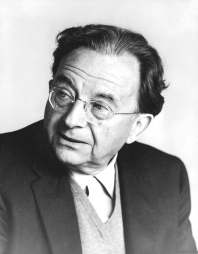 |
| Erich Fromm |
(Photo: Free Use Image, Wikipedia)
Fromm was not without his critics. Berkeley political theorist, John Schaar, viewed Fromm
as an unrealistic utopian proponent of an "escape from authority." Fromm was widely attacked
for his position for a bi-national state in the Middle East, and for his opposition to the
Vietnam War and American-led "modernization." Orthodox Marxists and Freudians criticized his
work for dismissing insights from these traditions. Despite these controversies, Fromm can
be said to have been an important twentieth century thinker and a truly engaged global public
intellectual.